


In recent years, the term “sustainable development“ has flooded the media and worked its way into almost every corner of life. It comes up in global forums, regional seminars, national strategies, and organizational mission statements. We talk about it so often that it has come to feel like common knowledge, something whose meaning is plain and simple. But what does it mean exactly? And, further still, how does it come to mean what it means?
Let’s start with what is one of the most common definitions of sustainable development nowadays, the one promoted by the United Nations: “meeting the needs of the present without compromising the ability of future generations to meet their own”. This definition is concretized by 17 Sustainable Development Goals (SDGs) and 169 targets, listing out the to-do works spanning three dimensions: economic growth, social inclusion, and environmental protection. While bringing these three dimensions together seems obvious now, arriving there did take decades of rethinking and adjusting, and the weight of each dimension has not always been the same.
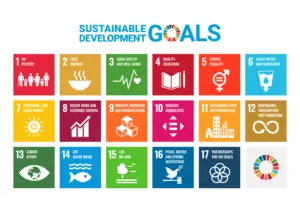
Figure 1. United Nations Sustainable Development Goals. Source: https://www.un.org/sustainabledevelopment
After the Second World War, the United Nation General Assembly (UNGA) launched the First Development Decade (1960-1970), which tied development closely and primarily to economic goals such as gross national income (GNI). Far beyond the reason that GNI is easier to quantify compared to less tangible social-environmental indicators, by the 1950s, economically advanced countries had managed to rein in the most pressing development problems of the time: unemployment, absolute poverty, and economic inequality (Seers, 1969). The thinking therefore was that economic growth was both an end and a means: if poor countries could accumulate capital, industrialize, and grow their economies, prosperity would follow and eventually spread through the population.
It was soon recognized, however, that high rates of economic growth did not automatically ease social and human problems. This led to greater emphasis on the attainment of physical, moral, intellectual, and cultural goals as part of the development process (UN Second Development Decade, 1971–1980). At the same time, a re-assessment of decades of economic growth as the overriding goal, prompted by influential work such as Carson’s “Silent Spring” (1962) and the “Founex Report on Development and Environment,” (1971) gave environmental concerns greater weight in development discourse.
Between 1981 and 2000, the UN declared the Third (1981-1990) and Fourth (1991-2000) Development Decades of which development dimensions did not deviate much from the previous periods. Perhaps the biggest conceptual shift of this period was the rise of the human development approach. Initiated by the economist Mahbub Ul Haq and anchored in the Nobel laureate Amartya Sen’s work on human capabilities, the approach focuses on expanding the richness of human life rather than simply the richness of the economy in which human beings live. At the same time, environmental sustainability also moved firmly onto the agenda, crystallizing at the 1992 Earth Summit in Rio de Janeiro, Brazil.
From 2000 to 2015, the Millennium Development Goals set targets for realizing a set of fundamental values deemed essential to international relations – freedom, equality, solidarity, tolerance, respect for nature, and shared responsibility. These values framed the UN’s eight specific goals throughout the period.
To carry forward the goals left unfinished in the previous period, and to add new goals suited to the development challenges of the new era, the UN advanced the Sustainable Development Goals (SDG) over 2016 – 2030, with the 17 goals and 169 targets that we now see so often nowadays.
If you feel the UN’s definition is still vague and open to too many interpretations, you are not alone. In “Caring for the Earth: A Strategy for Sustainable Living“(1991), the IUCN, UNEP and WWF mentioned the same point, then offered their own definition: sustainable development means “improving human quality of life within the carrying capacity of supporting ecosystems” (p. 10). This might be more specific than the UN’s, but, likewise, it remains human-centered and rests on a perhaps idealistic faith in win-win solutions. Writing in response to the trio’s strategy, John Robinson argued in “The Limits to Caring: Sustainable Living and the Loss of Biodiversity“ (1993) that development and conservation are inherently at odds. The sustainable-use agenda that the trio advocates would, on his account, still lead to biodiversity loss; and we have to be honest about the trade-offs involved in that development process.
In addition to the mentioned efforts to define sustainable development, there are other ideologies that have been shaping how the term can be understood. The Norwegian philosopher Arne Næss, one of the originators of “deep ecology,” set his position against what he called the “shallow ecology” movement of his day. On the deep ecological view, human and non-human life alike possess inherent worth, and the value of other life forms does not depend on how useful they are to us. It follows that we have no right to reduce this richness and diversity except to meet vital needs. Such a non-anthropocentric account of nature has clear implications for how sustainable development might be defined, demoting the economic pillar from the prominence it usually enjoys.
The degrowth movement pushes that demotion further still. Emerging in the 1970s, this school of economic thought broadly calls for economies that shrink rather than grow, so that we draw less on the world’s energy and resources and put wellbeing ahead of profit. A definition of sustainable development shaped by degrowth would lean, in the movement’s terms, “more towards equity, democracy, and action driven by non-governmental and non-market actors”.
These strands of thought are not an exhaustive list. Others have shaped, and continue to shape, how sustainable development is understood.
As the world changes, so does what we mean by the term. What, then, should organizations and development practitioners do when the time comes to have a definition of their own, or to decide which ideology fits their particular context?
In the first lectures at my graduate program, I learnt that sustainable development is a normative concept, more of a personal journey in which each development practitioner can build their own definition. And to make that defining process less daunting, it might help to start from the notions of “Good Change” inspired by Robert Chambers’s essay “Knowing in Development: A Radical Agenda for the Twenty-First Century“ (2014). It is a truism that, like development, good change is a normative concept. Chambers, therefore, put forward the who? and whose? questions to kick off the thinking of good changes: Whose values determine what is good? Whose priorities determine what change matters? Who has the power to determine values and priorities? Who gains and who loses?. Chambers also invited us to adopt the “Knowing” process to become aware of how we know what we know, by continually practicing reflexivity regarding our own conditionings and our choices of methodologies to approach a development matter. That way, we stand a better chance of seeing more clearly how sustainable development should look like and, therefrom, forming our own definition of sustainable development.
Duyen Nguyen
Disclaimer:
Although we have taken all possible measures to ensure the accuracy of the information contained in this writing, we shall not be liable for any damage caused to users by the use of the information contained herein.
The content of this publication has not been approved by the United Nations and does not reflect the views of the United Nations or its officials or Member States.
Extended Reading Materials
Anonymous (1971). The Founex Report on Development and Environment.
Carson, R. (1962). Silent Spring. Boston: Houghton Mifflin. [Read Chapters 1-3] Library Access.
Chambers, R. (2014). “Knowing in Development: A Radical Agenda for the Twenty-First Century.” Forum for Development Studies, Vol 41 (3).
Grove, C. R. (1995). Green Imperialism: Colonial expansion, tropical island edens and the origins of environmentalism, 1600-1860. Cambridge, UK.
Harris, R D. and J. Perry (2025). ‘The Demise of USAID: Few Regrets in Latin America.’ org, Feb. 17.
Independent Taskforce on Creative Climate Action (2022). Final Report. PSIA, Sciences Po.
Lancet Editorial (2025). ‘The demise of USAID: Time to rethink foreign aid?’ The Lancet, Vol. 45, March 22.
Meadows, D. H., Randers, J., & Meadows, D. L. (1972; 2004). The Limits to Growth: The 30-year Update. White River Junction, Vt.: Chelsea Green Pub. Co.
Pope Francis (2015). Encyclical Letter on Care for our Common Home.
Reisner, M. (1986). Cadillac Desert: The American West and its disappearing water. New York: Penguin. Library Access.
Robinson, J. G. (1993). “The Limits of Caring: Sustainable living and the loss of biodiversity.” Conservation Biology, Vol. 7, #1, pp. 20-28.
Robinson, J. G. (2024). “Scaling up area-based conservation to implement the Global Biodiversity Framework’s 30×30 target: The role of Nature’s Strongholds. PLOS Biology.
Rockström, J. et al (2009). “Planetary Boundaries: Exploring the Safe Operating Space for Humanity.” Ecology and Society 14, no. 2, art. 32.
Rodney, W. (1972). “Problems of Third World Development.” Ufahamu: A Journal of African Studies, 3(2).
Romm, J. (2002) “The Coincidental Order of Environmental Justice.” In K. Mutz et al (eds.) Justice and Natural Resources: Concepts, Strategies, and Applications. Island Press.
Seers, D. (1969). The Meaning of Development. Sussex: IDS.
Sen, A. (2004). A More Human Theory of Development. Interview by Shaikh, N.
A. Cockburn (1990). The Fate of the Forest: Developers, destroyers and defenders of the Amazon. Chicago: University of Chicago Press.
Tsing, A. L et al editors (2021) Feral atlas: The more-than-human Anthropocene. A Stanford Digital Project.
Tuck, E. and Yang, K. W. (2012). Decolonization is not a metaphor, in Decolonization, Indigeneity, Education &; Society.
United Nations (2015). Transforming our World: The 2030 Agenda for Sustainable Development. Sustainable Development Knowledge Platform.
United Nations (n.d.) “Convention on Biological Diversity: Key international instrument for sustainable development.